Glyco Reset Official Website Blog Dose timing
Blog · Apple cider vinegarLiquid Drops Before A Meal: What Dose Timing In The Vinegar Trials Actually Looked Like
The vinegar trials did not dose in drops. They mostly used tablespoon or teaspoon amounts of vinegar, measured against a set meal, and at least one trial tested timing directly: two teaspoons worked best taken with a meal, not five hours ahead of it. A separate small study tested vinegar at bedtime, hours before the next morning’s reading, a different timing question again.
None of that tells you how many drops to take or when; the label does that. Below is what “timing” meant in each trial, in the researchers’ own units.
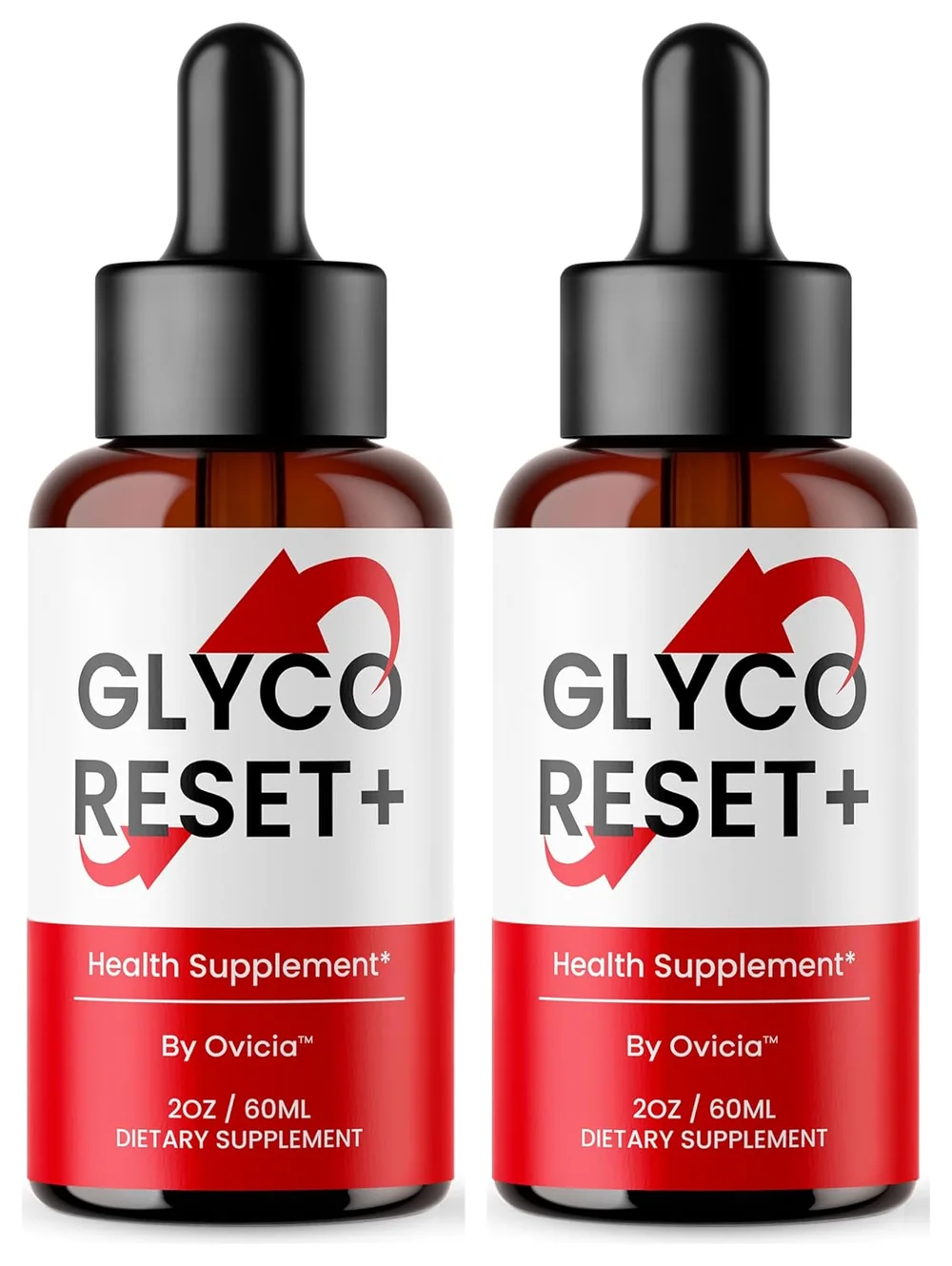
Apple cider vinegar heads the Glyco Reset ingredient list, and the article on vinegar and blood sugar after a meal already covers what the dose-response trial found. This article asks a narrower question: when, in relation to a meal, did the trials actually give their vinegar, and in what everyday-sized amount? That matters because a liquid drop is taken on its own routine, set by its own label, and the timing question in the research is a different question from the amount question.
- The clearest timing test. A 2010 trial compared vinegar taken during a meal against the same amount taken five hours before it.
- The amount in that test. Two teaspoons, about 10 grams, described in the paper as the effective dose.
- The result. The glucose-lowering effect was strongest with the meal, not hours ahead of it.
- A different timing question. A separate short paper tested vinegar at bedtime, measured against the next morning’s waking glucose in adults with type 2 diabetes.
- What neither tells you. How many drops of a liquid supplement to take, or when. That is the label’s job, not the trials’.
Glyco Reset is a dietary supplement, not a treatment for diabetes or any disease. If you take insulin or another medicine that lowers blood sugar, speak to your doctor before the first serving of anything sold to support blood sugar, and never change a prescribed dose or its timing on the strength of a study.
Why timing is a separate question from dose
Most of the vinegar research gives a single answer to a single question: does vinegar, added to a test meal, change the glucose response that follows? Fewer studies ask a second question, which is when relative to the meal the vinegar has to be taken for that effect to show up. Timing and amount are not the same variable, and a trial has to be built specifically to separate them.
That second, timing-specific question is the one this article covers. It sits beside, not instead of, the dose-response findings in the main vinegar article, and beside the mechanism, stomach emptying, that the vinegar safety article also touches on.
The trial that tested timing directly
A 2010 study from Arizona State University ran four randomised crossover trials in adults, most without diabetes and one trial in adults with type 2 diabetes, to separate three variables at once: how much vinegar, when it was taken, and in what form. Each trial followed the same pattern: a standardised meal the evening before, an overnight fast, then a test meal of a bagel and juice (or, in one trial, a dextrose solution), with blood glucose measured over the following two hours.
On timing specifically, the trial compared vinegar taken during the test meal against the same amount taken five hours before it. The result was clear-cut in direction: the antiglycemic effect was most pronounced when vinegar was ingested during mealtime, not hours ahead of it. Five hours out, the effect was weaker.
The same paper tested amount and form alongside timing. Two teaspoons of vinegar, about 10 grams, reduced the post-meal glucose response; a larger amount (about 20 g, two tablespoons) did not clearly do more. Vinegar also had no effect when it was given with monosaccharides rather than a starchy meal, and a neutralised acetate salt did nothing either, both findings the authors read as pointing to a specific interaction between acetic acid and the digestion of complex carbohydrate, not to acid or sourness on their own.

Teaspoons and tablespoons: the units the trials actually used
It is worth being explicit about units, because they do not translate directly to a liquid-drop label. The 2010 trial described its effective dose as two teaspoons, roughly 10 grams of vinegar, a kitchen-scale amount rather than a laboratory one. The earlier dose-response trial covered in the main vinegar article used millimoles of acetic acid (18 to 28 mmol) added to a bread meal, a chemistry unit rather than a kitchen one. Neither paper reports drops, millilitres of a liquid supplement, or a percentage of a bottle.
| Study | Who took part | Timing tested | Amount tested |
|---|---|---|---|
| Johnston et al, 2010 | Four crossover trials, mostly adults without diabetes, one trial in type 2 diabetes | During the test meal vs. five hours before it | 10 g (two teaspoons) vs. 20 g (two tablespoons) |
| White & Johnston, 2007 | Adults with well-controlled type 2 diabetes | At bedtime, read the next morning | Not a mealtime dose; a single bedtime serving |
| Ostman et al, 2005 | 12 healthy adults | With a white-bread test meal | 18, 23 and 28 mmol of acetic acid |
| Liljeberg & Bjorck, 1998 | 10 healthy adults | Added to a starchy meal | Not stated in teaspoons; a measured addition to the test meal |
None of these units is a drop count. The Glyco Reset label sets its own serving and timing; this table describes what four published trials used, nothing more.
A different timing question: vinegar at bedtime
A short 2007 paper from the same research group asked a different timing question again: not vinegar with or before a meal, but vinegar taken at bedtime, with glucose read the next morning, in adults with well-controlled type 2 diabetes. That is an overnight timing window rather than a mealtime one, and the two should not be conflated; a trial that separates "with the meal" from "five hours before the meal" is answering a different question from one that separates "at bedtime" from "not at bedtime."
What matters for this article is the range of timing questions the research has actually asked: during a meal, hours before a meal, and at bedtime ahead of the next reading. A daily liquid drop, taken once a day as its own label directs, does not map onto any one of those three windows without assuming things the trials did not test.
Glyco Reset, on the official website
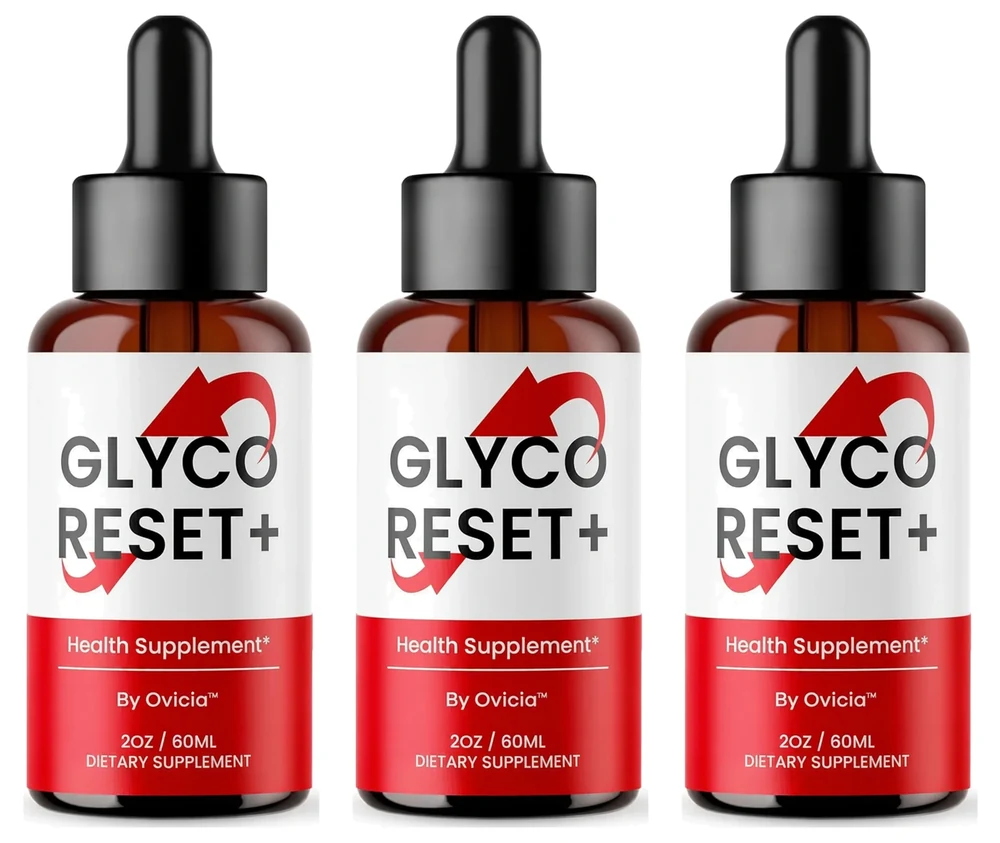
Liquid drops in a 2 oz / 60 mL bottle, six named ingredients with apple cider vinegar first, taken daily as the label directs. Sixty days from the date of purchase to change your mind.
Order Glyco ResetWhy mealtime timing tracks the stomach-emptying explanation
The 2010 trial’s finding, that mealtime timing worked better than a five-hour head start, fits the mechanism the older trials proposed. The 1998 study on stomach emptying found vinegar’s effect tied to how it slowed a starchy meal’s exit from the stomach. If that is the mechanism, vinegar taken hours before the meal has largely left the stomach by the time the meal arrives, so it has little left to slow. Vinegar and monosaccharides given together, tested in the same 2010 paper, showed no effect either, consistent with an interaction that needs complex carbohydrate actually present to act on.
This reading is an inference from two papers read together, not a statement either paper makes about a finished liquid-drop product. No published trial has tested a Glyco Reset serving at any of these timings.
A liquid drop is not a measured trial dose
Every trial in this article measured a specific, weighed or metered amount of vinegar and gave it at a specific, clock-defined point relative to a test meal, then drew blood on a schedule. A liquid drop taken from a dropper bottle, as part of an everyday routine, is a different kind of thing: it is not weighed at the point of use, and it is not tested against a single, controlled meal in a lab.
That difference is exactly why this article stops short of translating "two teaspoons, at mealtime" into a drop count or a time of day for Glyco Reset. The seller’s own how-to-use page and the bottle’s own Supplement Facts panel, covered closely on the label, read closely, are the only sources for how the product itself is meant to be taken; this article’s job is to report what the published trials did, not to bridge that gap with a number the label does not print.
There is also a practical reason the gap cannot be closed by arithmetic. A teaspoon of whole vinegar and a metered drop from a dropper bottle are measured on different scales, and the finished liquid on the Glyco Reset list is not pure vinegar; it also carries purified water, cane sugar, apple pectin, citric acid and sodium citrate, in proportions the label alone states. Scaling a trial’s teaspoon figure down to a drop count would mean guessing at a dilution the bottle’s own panel already answers, which is exactly the kind of invented number this article avoids.
Why the label sets the routine, not the research
Putting the two pieces side by side: the research says that, in a laboratory test-meal setting, vinegar timed to a meal outperformed the same vinegar taken five hours ahead of it, and that roughly two teaspoons was the effective amount in that one trial. The label says what a serving of Glyco Reset is and when to take it. Those two statements answer different questions, from different kinds of evidence, and only one of them, the label, is a claim about the product a buyer actually receives.
Readers who want the fuller dose-response picture, including the millimole figures from the bread-meal trial, should read apple cider vinegar and blood sugar after a meal; readers who want to know what the trials did and did not measure over longer stretches of time should read what the vinegar studies didn’t measure.
Questions readers ask about vinegar timing
Does taking vinegar hours before a meal work as well as taking it with the meal?
In the one trial that tested this directly, no. The effect on post-meal glucose was strongest when vinegar was taken during the meal, and weaker when the same amount was taken five hours ahead of it.
How much vinegar did the timing trial use?
Two teaspoons, about 10 grams, described in the paper as effective; a larger, two-tablespoon amount was tested too and did not clearly improve on it. Those are kitchen-scale, whole-vinegar amounts, not drop counts from any liquid supplement.
Is bedtime vinegar the same thing as mealtime vinegar?
No. They are different timing questions tested in different small trials, one against a test meal and one against the next morning’s waking glucose in adults with type 2 diabetes. Neither should be read as evidence for the other.
Does any of this tell me when to take Glyco Reset?
No. The trials describe whole vinegar tested against test meals in a lab. Glyco Reset’s own how-to-use page and its label are the only sources for how and when the product itself is meant to be taken.
Why did the larger, two-tablespoon amount not do more than two teaspoons?
The 2010 trial reported that the smaller, two-teaspoon amount was already effective and that doubling it to two tablespoons did not clearly improve on that result within the same test-meal design. The paper does not explain why the curve flattens there, and no later trial in this article’s source list revisited the question at a third amount, so it is fair to say the dose-response relationship above 10 g of vinegar, in a single meal, is not settled by the published record this article draws on.
Sources cited in this article
- Johnston CS, Steplewska I, Long CA, Harris LN, Ryals RH. Examination of the antiglycemic properties of vinegar in healthy adults. Ann Nutr Metab. 2010;56(1):74-9. PMID 20068289. https://pubmed.ncbi.nlm.nih.gov/20068289/
- White AM, Johnston CS. Vinegar ingestion at bedtime moderates waking glucose concentrations in adults with well-controlled type 2 diabetes. Diabetes Care. 2007;30(11):2814-5. PMID 17712024. https://pubmed.ncbi.nlm.nih.gov/17712024/
- Ostman E, Granfeldt Y, Persson L, Bjorck I. Vinegar supplementation lowers glucose and insulin responses and increases satiety after a bread meal in healthy subjects. Eur J Clin Nutr. 2005;59(9):983-8. PMID 16015276. https://pubmed.ncbi.nlm.nih.gov/16015276/
- Liljeberg H, Bjorck I. Delayed gastric emptying rate may explain improved glycaemia in healthy subjects to a starchy meal with added vinegar. Eur J Clin Nutr. 1998;52(5):368-71. PMID 9630389. https://pubmed.ncbi.nlm.nih.gov/9630389/
- MedlinePlus, US National Library of Medicine. Blood Sugar. https://medlineplus.gov/bloodsugar.html