How Long Blood Sugar Supplements Take to Work
Two weeks in, nothing has happened, and the bottle starts to look like a mistake. That is the moment most people quit — often before the ingredient has had a fair chance, and sometimes long after it was obvious it would not help. Knowing which marker moves on which timescale is what turns an expensive guess into a test you can actually read.

How long do blood sugar supplements take to work?
Most clinical trials of glucose support ingredients run for 8 to 12 weeks, and that is the fairest window to judge one on. Post-meal response can shift within days if an ingredient is going to do anything at all, fasting glucose typically needs several weeks of consistent use, and HbA1c reflects roughly the previous two to three months so it cannot confirm anything sooner. Judge earlier than that and you are reading noise.
- Give it 8 to 12 weeks of consistent, labelled-serving use.
- Pick your markers before you start, not after.
- Feeling nothing in week one is normal, not a verdict.
Why there is no single answer
Ask how long a supplement takes and you are really asking four questions at once: how fast the compound reaches useful levels in the body, how fast the biology it touches can change, how fast the marker you are measuring updates, and how much noise sits between the signal and your ability to see it. Those four clocks run at completely different speeds, which is why honest answers always come with a "depends on what you are measuring".
The first clock is pharmacokinetics, and it is usually the fastest. A botanical taken orally is absorbed, distributed and cleared within hours. Some ingredients reach a steady state within a few days of repeated dosing; others clear quickly enough that timing around meals matters more than accumulation. The second clock is physiological. Changing how sensitively cells respond to insulin is a matter of weeks, not hours, because it involves the slow business of enzyme expression, fat distribution and cellular adaptation. The third clock is measurement, and it is often the slowest of all — HbA1c is a rolling average of red blood cell exposure over their lifespan, so it simply cannot move quickly. The fourth clock is statistical: day-to-day variation in fasting glucose is large enough that a single reading tells you almost nothing.
How long blood sugar supplements take to work, marker by marker
Break it down by what you would actually measure and the picture sharpens considerably. The post-meal curve is the most responsive thing on the list. Anything that slows carbohydrate digestion or gastric emptying would show up in the two hours after a meal, on the very first dose, if it works. That is why trials of carbohydrate-blunting ingredients often use a single-meal design. If an ingredient is sold on spike-blunting and you see nothing across several matched meals, more time is unlikely to rescue it.
Fasting glucose is slower and much noisier. It is influenced by last night's sleep, yesterday's dinner, stress hormones, illness, and the dawn rise in cortisol that lifts morning numbers regardless of what you swallowed. Meaningful change in a fasting average generally needs several weeks and a comparison of averages, not of individual mornings. HbA1c is slower still by design, and insulin sensitivity measured properly is a laboratory exercise most people will never run. Body composition, which drives a lot of glucose handling, moves on a scale of months.
The four windows, from day one to three months
Here is the same information as a schedule. It is a reasonable framework for any glucose support product, whether that is a single-ingredient capsule or a multi-botanical liquid — and if yours is a dropper, the practical side of dosing and timing liquid drops follows the same clock.
| Window | What could plausibly change | What to measure | How much to trust it |
|---|---|---|---|
| Days 1–7 | Post-meal response; digestive tolerance; sweet cravings | Two-hour post-meal readings on repeat meals | Low for anything else — mostly a tolerance check |
| Weeks 2–4 | Early fasting-glucose drift; habit consolidation | Weekly average of morning readings | Moderate — treat single days as noise |
| Weeks 4–8 | Insulin sensitivity adaptations; fasting averages | Rolling four-week averages; waist measurement | Reasonable — the first fair read |
| Weeks 8–12 | HbA1c reflects the trial period; body composition | Repeat HbA1c; averages versus baseline | Highest — this is the verdict window |
Notice what this implies about buying. A single bottle is roughly a month, which lands squarely in the least informative part of the schedule. That is not a marketing trick so much as a fact about biology, and it is why guarantee windows and multi-month supplies exist in this category at all. It is also why comparing the best supplement for blood sugar control on price per bottle alone tends to mislead — the relevant unit is the cost of a full trial period.
Plan the trial before you buy the bottle
Check the current supply options, the shipping terms and the length of the money-back guarantee, then set your decision date to match the window rather than the bottle.
Check Availability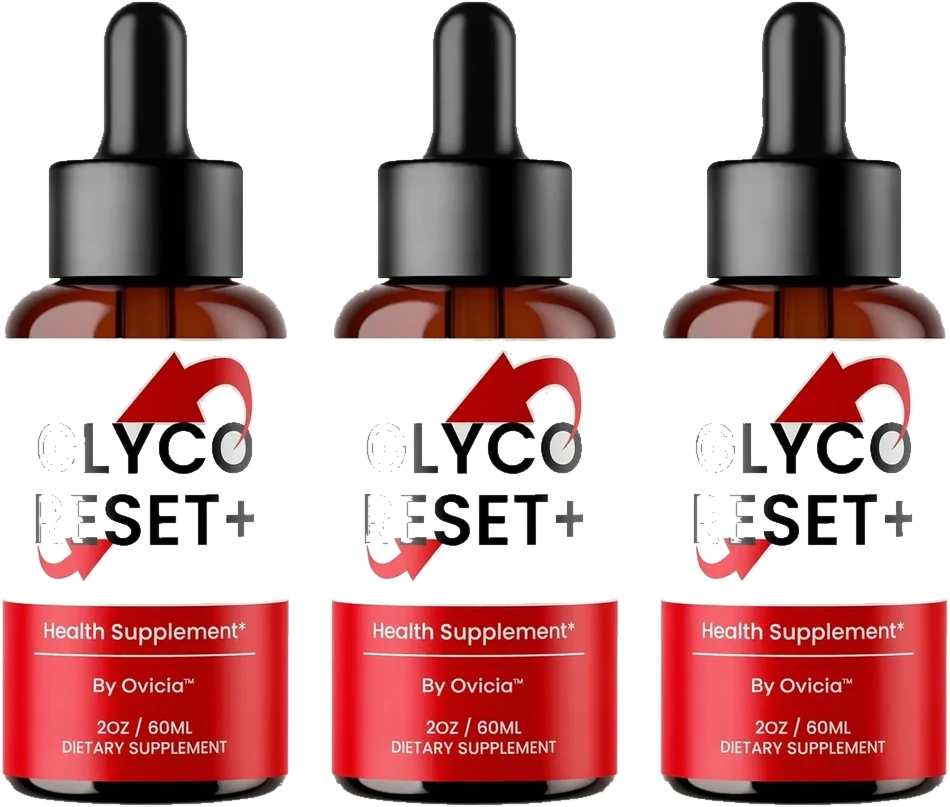
What HbA1c can and cannot tell you
HbA1c is the marker people reach for when they want a verdict, and it is genuinely useful — but it is widely misread. It measures the proportion of haemoglobin that has been glycated, meaning glucose has attached to it over the lifespan of the red blood cell. Because those cells live for around three months and are replaced continuously, the result is weighted towards the most recent few weeks but still reflects a long average. Repeat it too soon and you are largely re-measuring the period before you started.
There is a second limitation that gets less attention. Anything that changes red blood cell turnover changes HbA1c independently of glucose. Iron deficiency, recent blood loss, pregnancy, some anaemias and certain haemoglobin variants can all skew it in one direction or another. This is one of several reasons the number belongs in a conversation with a clinician rather than in a private scorecard, and why a supplement should never be judged on a single HbA1c result taken out of context. Our explainer on how long it takes to move A1C goes through the arithmetic in more detail.
The lag is structural, as A1C and how long it takes to lower it explains.
Give it the full window, keep the rest of your life boringly stable, and measure averages rather than moments. A trial you can actually read is worth more than a product you cannot evaluate.
How to run a fair test on yourself
A self-experiment is not a clinical trial, but a few habits make it far less useless. Start by writing down a baseline before the first dose: two weeks of morning readings if you have a meter, a waist measurement, your current sleep pattern, and if you have a recent HbA1c from your doctor, that number and its date. Without a baseline there is nothing to compare against, and memory is a generous editor.
Then change one thing. The most common way people ruin their own experiment is starting a supplement, a new eating pattern and a gym membership in the same week, then having no idea which one did the work — or blaming the supplement when the real driver was two extra hours of sleep. Keep the labelled serving consistent, take it at the same point in your day, and do not stack a second glucose-marketed product on top mid-trial.
Finally, pick your decision date in advance and write it on the calendar. Twelve weeks is the standard. Deciding the rule before you see the data is the only reliable defence against reading whatever you were hoping for into a noisy set of numbers, and it also stops the opposite error of quitting on day nine because one morning reading was high.
A trial is easier to hold when it sits inside a wider natural blood sugar routine.
Why a supplement can look like it is doing nothing
Several unglamorous explanations account for most disappointing outcomes, and they are worth ruling out before concluding the ingredient is useless. Under-dosing is the first: a proprietary blend can list an impressive ingredient at a fraction of the amount used in the research, and the label may not tell you which. Inconsistency is the second — four doses a week is not the protocol any trial ran. The third is that the underlying situation is being driven by something the supplement does not touch: sleep debt, chronic stress, a medication side effect, or simply a diet that would overwhelm any capsule.
The fourth possibility is the honest one that supplement pages rarely print: the ingredient may not do much in people like you. Effect sizes in this category are generally modest, they are usually largest in those who started with the poorest control, and a person already eating well and exercising has less room to improve. That is not a failure of the product so much as a mismatch between what it can offer and what was already true. A formula such as Glyco Reset is built as daily support on top of those foundations, not as a replacement for them.
Under-dosing is the usual culprit, which is why berberine dosage and timing is worth checking against the label.
What waiting cannot fix
Time solves an impatience problem, not a biology problem. No supplement in this category treats, prevents or reverses any disease, and no length of trial period changes that. If your readings are outside the normal range, the correct next step is a clinician, not another three months of self-monitoring. If you take medication for blood sugar, adding a botanical that may lower it further — berberine being the obvious example — is a conversation to have before you start, not after.
It is also worth saying plainly that patience can be exploited. "Give it 90 days" is both sound advice and a convenient way to run out a refund window. Read the guarantee terms first, note the date it expires, and make sure your decision point falls inside it. Honest sellers have no problem with a buyer who plans the exit before the entry, and that is one of the cleaner signals available when you are comparing the best blood sugar support supplement options in a crowded market.
Frequently asked questions
How long do blood sugar supplements take to work?
Most trials of glucose support ingredients run for 8 to 12 weeks, and that is the fairest window to judge one. Post-meal response can in principle shift within days, fasting glucose usually needs several weeks of consistent use, and HbA1c reflects roughly the previous two to three months, so it cannot confirm anything sooner than that.
Should I feel anything in the first week?
Not necessarily, and feeling nothing is not a sign of failure. Glucose support is largely invisible from the inside. Some people notice steadier energy between meals or fewer sweet cravings early on, but sensation is an unreliable proxy for what a meter would show, and expectation alone can produce the feeling.
When should I stop and ask for a refund?
If you have taken the full labelled serving consistently for the length of a typical trial period, kept your diet and activity roughly stable, and seen no movement in the markers you chose to track, that is a reasonable point to stop. Check the guarantee window before you start so the trial fits inside it.
Does taking more make it work faster?
No. Doubling a serving does not compress a biological timeline, and with botanicals such as berberine it mainly raises the chance of digestive upset and medication interactions. Stay at the labelled serving, take it consistently, and give it the full window before deciding.
References
- NIH NCCIH — Diabetes and Dietary Supplements
- Efficacy of berberine in patients with type 2 diabetes mellitus. Metabolism, 2008 (PMID 18442638)
- Berberine in the treatment of type 2 diabetes mellitus: a systematic review and meta-analysis. Evid Based Complement Alternat Med, 2012 (PMID 23118793)
- PubMed — berberine and glycemic control trials
- NIH NIDDK — The A1C Test and Diabetes
- Mayo Clinic — A1C test overview
- Harvard T.H. Chan School of Public Health — Carbohydrates and Blood Sugar
Related reading
- Blood Sugar and Belly Fat: What Actually Links Them
- CGM for Non-Diabetics: What Your Data Reveals
- Berberine Dosage and Timing for Blood Sugar
Set your decision date, then start the clock
See the current multi-month supply options and the guarantee period on the official store, so your trial window and your refund window line up.
Order Now