Banaba Leaf and Corosolic Acid for Blood Sugar: Evidence: What the Evidence Shows
Banaba leaf is a quieter name on the ingredient list, but its active compound — corosolic acid — is the reason it appears in blood-sugar formulas at all. Here is the honest picture of what corosolic acid may do for glucose, how fast, and how it is dosed in blends like Glyco Reset.
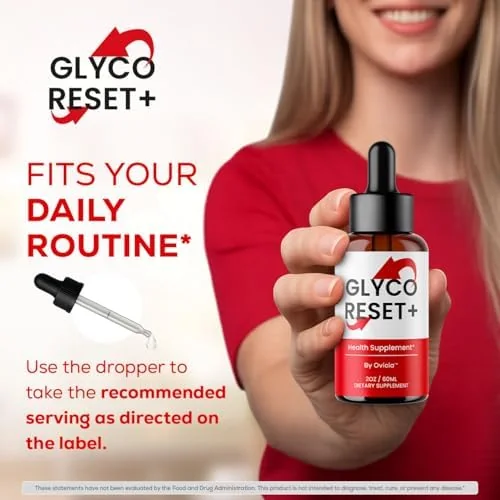
Does banaba leaf help lower blood sugar?
Banaba leaf supplies corosolic acid, a compound studied for helping cells take up glucose. Some small trials report lower post-meal blood sugar within about an hour, though effects are modest and vary. It works best as supportive lifestyle care alongside diet and exercise, not as a treatment for any condition or a replacement for medication.
- Extracts are standardised by corosolic acid, often to 1 to 2 percent.
- Studies use roughly 10 to 48 mg of corosolic acid per day.
- May add to glucose-lowering medication, so monitoring matters.
What banaba leaf is
Banaba (Lagerstroemia speciosa) is a flowering tree native to South and Southeast Asia, where its leaves have a long history of traditional use as a tea for glucose-related concerns. What has drawn modern interest is not the leaf in general but one family of compounds it contains, chief among them corosolic acid. Because the whole leaf varies enormously in potency, supplements almost always use a standardised extract, concentrated and measured so each dose delivers a known amount of the active compound. That standardisation is the single most useful thing to understand about banaba, because it is what makes one product's dose comparable to another's.
Corosolic acid: the active compound
Corosolic acid is a triterpenoid — a naturally occurring plant compound — and it is where banaba's reputation comes from. In laboratory and animal research, corosolic acid has been observed to influence how glucose moves from the bloodstream into cells, and it is sometimes described as having "insulin-like" or "insulin-sensitising" activity. The proposed mechanism involves helping cells recruit their glucose transporters, the little shuttles that pull sugar out of the blood and into tissue where it can be used for energy.
That is a genuinely interesting mechanism, and it explains why banaba earns a place on ingredient lists. But two words of caution belong right here. First, much of the mechanistic work is preclinical — cells and animals, not people. Second, "insulin-like" is a description of a mechanism, not a promise of a clinical result. Corosolic acid is not insulin and does not replace it. When you see banaba marketed, read those mechanism claims as "here is why researchers are curious," not "here is what this will do for you."
A different mechanism entirely drives gymnema sylvestre and sugar cravings, which is why the two are often blended rather than swapped.
How quickly banaba may act
One thing that sets banaba apart from slower-acting ingredients is the timeframe some studies report. A handful of small human trials have looked at post-meal (postprandial) glucose and found that corosolic acid may help blunt the rise in blood sugar relatively soon after a dose — with effects noted within roughly 60 minutes in some designs. That is a faster window than you would expect from an ingredient that works only by slowly rebuilding some background process.
Encouraging as that sounds, keep the scale in mind. These are small studies, the effects reported are modest, and they vary with the person, the extract, the dose and what was eaten. "May reduce the post-meal spike a little, sometimes, fairly quickly" is honest; "lowers your blood sugar in an hour" as a blanket claim is not. If banaba does anything for you, it is a gentle nudge on top of the meal itself, not a lever that overrides it.
Why standardised extracts matter
Because corosolic acid is the point, the concentration of corosolic acid is what you actually want to know — not the raw milligrams of banaba leaf. Extracts are commonly standardised to 1 percent or 2 percent corosolic acid, and studies typically report their dose in terms of the corosolic acid delivered rather than the leaf weight. This is why two products can both say "banaba leaf" and be worlds apart: a large amount of a weak, unstandardised leaf powder may deliver less active compound than a small amount of a well-standardised extract.
The practical takeaway: if banaba is a reason you are interested in a formula, look on the supplement facts panel for the standardisation (the "% corosolic acid") and, ideally, the corosolic acid amount. If a product only lists "banaba leaf" with no standardisation, you genuinely cannot tell how much active compound you are getting.
Typical dosing
Human studies have used banaba extracts delivering roughly 10 to 48 mg of corosolic acid per day, which corresponds to different leaf-extract weights depending on the standardisation. In a stacked blood-sugar formula, the banaba portion may be lower than a standalone study dose, since the label has to make room for several ingredients. As with the others in this category, more is not automatically better — and because banaba may lower glucose, pushing the dose is not a smart way to chase a bigger effect.
For anyone experimenting, the sensible approach is the same as for the rest of this shelf: start at the lower end, take it consistently, judge it over weeks rather than days, and pay attention to how you feel rather than to marketing timelines.
The honest summary: corosolic acid gives banaba leaf a plausible, mechanistically interesting rationale, and a few small trials suggest a modest, fairly quick effect on post-meal glucose. It is a supporting ingredient with promising-but-limited human evidence, not a proven treatment.
How banaba fits a stacked formula
Banaba rarely stands alone. In products like Glyco Reset it is usually combined with chromium, gymnema, cinnamon, berberine or alpha-lipoic acid. The rationale for stacking is complementary mechanisms: banaba and corosolic acid nudging glucose transport, gymnema working on taste and absorption, chromium acting as an insulin cofactor, and so on. The reasonable hope is that several modest, differently-aimed effects add up to something more useful than any one alone.
The same logic carries the same caveat we repeat for every effective ingredient: additive glucose-lowering is a real possibility. For a healthy adult that is usually nothing to worry about, but for someone on insulin, metformin or a sulfonylurea, several ingredients each pulling in the same direction can go further than intended. That is a monitoring-and-doctor conversation, not a reason for alarm.
Seen next to the wider shelf, banaba sits mid-table among the best-evidenced blood sugar supplement ingredients rather than near the top.
What realistic results look like
It helps to set expectations before you start, because the marketing around banaba tends to skip this part. If banaba does something for you, the honest version looks like this: a slightly gentler curve after a carbohydrate-heavy meal, noticeable only if you happen to be measuring, building over weeks of consistent use rather than announcing itself on day one. It will not override a large, fast-digesting meal, and it will not do the work that food choices, movement, sleep and weight do far more powerfully. The most useful way to judge any single ingredient is to keep everything else steady and give it a fair, unhurried trial — and to remember that "no dramatic change" is a completely normal and expected outcome for a supportive botanical, not a sign you did something wrong.
It is still better studied than some companions: the evidence behind juniper berry for blood sugar is thinner again.
The safety part worth reading
In short-term studies at typical doses, banaba leaf extract is generally well tolerated. The main caution is the one that applies to anything with real glucose activity: if you take diabetes medication, banaba may add to its effect, so coordinate with your doctor and monitor your levels. Banaba is not well studied in pregnancy or breastfeeding, so those groups should avoid it, and anyone with an existing condition or taking regular medication should check first. None of this is unusual — it is ordinary caution for an ingredient chosen precisely because it may do something.
Frequently asked questions
What is corosolic acid in banaba leaf?
Corosolic acid is the main active compound in banaba leaf (Lagerstroemia speciosa). It is a triterpenoid that has been studied for helping cells take up glucose, which is why banaba extracts are usually standardised by their corosolic acid content, often to 1 or 2 percent.
How quickly does banaba affect blood sugar?
Some small studies suggest banaba may support lower post-meal glucose relatively quickly, with effects reported within about 60 minutes of a dose. Results vary by person, extract and dose, and this quick action is a modest supportive effect rather than a substitute for medication.
What is a typical banaba leaf dose?
Studies commonly use banaba extracts providing roughly 10 to 48 mg of corosolic acid per day, often standardised to 1 to 2 percent corosolic acid. In a blended formula the amount may be smaller, so read the label. Start low, stay consistent, and give it time.
Is banaba leaf safe to take daily?
Banaba leaf extract is generally well tolerated in short-term studies at typical doses. Because it may lower glucose, combining it with diabetes medication could have an additive effect, so monitoring and a doctor's input are wise. It is not well studied in pregnancy or breastfeeding, so those groups should avoid it.
References
- NIH NCCIH — Diabetes and Dietary Supplements
- A review of the efficacy and safety of banaba (Lagerstroemia speciosa L.) and corosolic acid. Phytother Res, 2012 (PMID 22095937)
- PubMed — banaba, corosolic acid and glucose
- PubMed — corosolic acid and postprandial glucose
- NIH Office of Dietary Supplements — supplement fact sheets
- American Diabetes Association — Standards of Care
Related reading
- Gymnema Sylvestre for Sugar Cravings and Glucose
- The Best-Studied Blood Sugar Supplement Ingredients
- Cinnamon for Blood Sugar: How Much Per Day?
See how banaba fits the Glyco Reset formula
Check the current sale pricing, the full ingredient label and the 60-day money-back guarantee on the official store.
Order Now