Cinnamon for Blood Sugar: How Much Should You Take Daily?
Cinnamon is the most familiar name on any blood-sugar ingredient list — and the one most surrounded by hype. Here is the honest picture: how much the research actually uses, why Ceylon and Cassia are not interchangeable, the coumarin concern, and what to realistically expect from a spice.

How much cinnamon should you take for blood sugar?
Cinnamon may modestly support insulin sensitivity and post-meal glucose, but the evidence is inconsistent and no single dose is proven. Studies use roughly 1 to 6 grams daily. For regular use, Ceylon cinnamon is safer than Cassia because it is far lower in coumarin. Treat cinnamon as a supportive spice, not a fix or a treatment.
- Research doses commonly range from about 1 to 6 grams per day.
- Ceylon cinnamon is lower in coumarin than Cassia for daily use.
- Effects are modest and gradual, not a replacement for the basics.
Why cinnamon is studied for blood sugar
Cinnamon is not just a flavour; it contains bioactive compounds — notably cinnamaldehyde and various polyphenols — that have shown activity in laboratory studies related to how the body handles glucose. The proposed mechanisms include supporting insulin sensitivity (helping cells respond to insulin a little better) and slowing how quickly the stomach empties, which could soften the rise in blood sugar after a meal. On paper, those are reasonable reasons to look closer, and they are why cinnamon keeps appearing in blood-sugar formulas and in kitchen-advice articles alike.
The trouble is the gap between "plausible mechanism" and "reliable result in people." Cinnamon sits squarely in that gap, and being honest about it is the whole point of this article.
What the human evidence really shows
Cinnamon has been tested in a good number of small human trials, and the results are genuinely mixed — both an updated systematic review in Annals of Family Medicine and a later dose-response meta-analysis report effects on some glucose markers while warning how much the trials differ from one another. Some studies report modest reductions in fasting glucose or improvements in post-meal readings; others find little to no difference against placebo. When researchers pool these studies in systematic reviews, the recurring verdict is some version of "promising but inconsistent." Effects, where they appear, are usually small, they vary with the type and dose of cinnamon, and they do not add up to anything resembling the effect of a medication.
So the honest framing is this: cinnamon might nudge your numbers a little, especially around meals, and it might do close to nothing — and current evidence cannot confidently tell you in advance which camp you are in. That uncertainty is not a reason to avoid a spice you enjoy; it is a reason not to rely on it as a strategy.
For appetite rather than glucose, gymnema sylvestre and sugar cravings is the better-known claim.
How much per day?
Across the research, cinnamon doses have ranged widely, most commonly somewhere between about 1 and 6 grams per day (roughly half a teaspoon to a couple of teaspoons of ground cinnamon, depending on density). There is no single "correct," proven dose, which itself tells you something about the strength of the evidence. In a stacked blood-sugar formula, the cinnamon portion may be lower than a standalone study dose, and it may be a concentrated extract rather than plain ground spice, so read the supplement facts panel if the amount matters to you.
A word on chasing higher amounts: more is not obviously better for the glucose effect, and it does raise a real safety consideration — coumarin — which brings us to the difference between the two common types of cinnamon.
Ceylon vs Cassia: the difference that matters
Not all cinnamon is the same plant. The two you will encounter are:
- Cassia cinnamon is the common, inexpensive type found in most supermarkets and baked goods. It is flavourful and perfectly fine for cooking — but it contains relatively high levels of a natural compound called coumarin.
- Ceylon cinnamon, sometimes labelled "true cinnamon," is milder, usually more expensive, and contains far less coumarin.
For a sprinkle on your oatmeal, the distinction barely matters. But if you are taking cinnamon daily and in larger amounts — the exact scenario people considering it "for blood sugar" tend to fall into — the type suddenly matters a lot, because coumarin has a downside when intake is high and habitual.
The coumarin concern
Coumarin, abundant in Cassia cinnamon, can be hard on the liver in large amounts for some people, and food-safety authorities have set tolerable daily intake guidance precisely because of it. In ordinary culinary use, most people never come close to a concerning amount. The risk climbs when someone starts taking large daily doses of Cassia specifically to affect blood sugar — the very behaviour this article is about. This is the neat irony of high-dose Cassia: the amount you might reach for hoping to move glucose is also the amount where coumarin becomes worth thinking about.
The straightforward fix is to choose Ceylon cinnamon if you intend to take it daily, since its coumarin content is much lower. If a supplement uses cinnamon and you plan to take it long-term, it is fair to ask which type it contains — and to be a little wary of products that do not say.
Assuming a kitchen spice is automatically safe is one of the commonest blood sugar supplement myths.
The honest summary: cinnamon has a plausible mechanism and some positive trials, but the overall evidence is inconsistent and the effect is modest at best. If you use it regularly, prefer Ceylon over Cassia to keep coumarin low, and treat it as a supportive spice rather than a fix.
When to take it
Because much of the interest is in post-meal glucose, cinnamon is often taken with or shortly before a carbohydrate-containing meal. That timing is sensible rather than proven — there is no strong evidence pinpointing a magic window — so the more useful habit is simply consistency: pairing it with a regular meal so you actually remember to take it. Sprinkling Ceylon cinnamon into a meal you were already eating is a low-risk way to include it without turning it into a supplement regimen at all.
How cinnamon fits a stacked formula
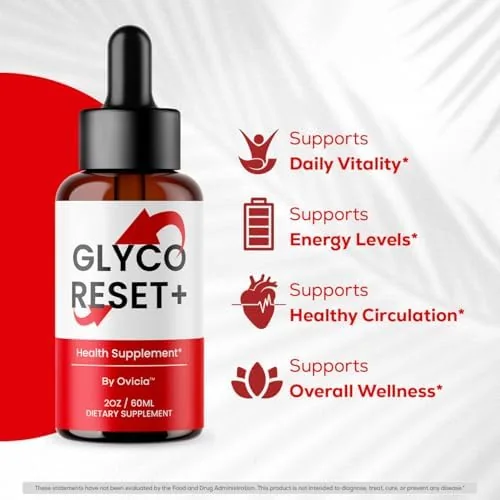
In products like Glyco Reset, cinnamon rarely appears alone; it is typically combined with chromium, gymnema, banaba, berberine or alpha-lipoic acid. The idea is that several modest, differently-aimed ingredients might add up to more useful support than any one on its own. Cinnamon's role in that stack is best understood as a supporting flavour-and-polyphenol contributor with a plausible-but-modest glucose rationale — not the ingredient carrying the formula. As with any effective combination, if several ingredients each nudge glucose down, the effects can add up, which matters most for anyone on medication.
Set beside its usual companions, the evidence for berberine, cinnamon and chromium is markedly uneven.
Whole spice versus a supplement extract
There is a practical fork in the road worth naming. You can get cinnamon either as the spice in your kitchen or as a concentrated ingredient inside a supplement, and they are not quite the same proposition. Whole Ceylon cinnamon stirred into food is cheap, pleasant, essentially risk-free at normal amounts, and easy to keep up because it rides along with meals you were eating anyway. A concentrated cinnamon extract in a capsule or liquid delivers a more standardised amount and slots neatly into a stacked formula, but it also makes it easier to reach the higher intakes where the coumarin question actually matters — which is precisely why the Ceylon-versus-Cassia choice becomes more important the more concentrated and habitual your intake gets. Neither route is a fix. If you enjoy cinnamon, the low-effort, low-risk move is simply to use the Ceylon spice in cooking and treat any supplement dose as a small addition rather than the main event.
The safety part worth reading
Cinnamon as a food is safe and enjoyable for the vast majority of people. The specific cautions apply to concentrated, daily, higher-dose use: prefer Ceylon to limit coumarin, especially if you have any liver concerns or take medication processed by the liver. If you take glucose-lowering medication, remember cinnamon may add a small amount to that effect within a stacked formula, so monitoring and a doctor's input are sensible. As always, pregnancy, breastfeeding, existing conditions and regular medication are reasons to check with a professional before taking cinnamon in supplement quantities.
Frequently asked questions
How much cinnamon lowers blood sugar?
Studies have used a wide range, commonly around 1 to 6 grams of cinnamon per day, but results are inconsistent and no single dose is proven to reliably lower blood sugar. Any effect tends to be modest and gradual, and it should be seen as supportive rather than a substitute for medication.
Is Ceylon or Cassia cinnamon better?
For regular or higher intake, Ceylon cinnamon is generally the safer choice because it contains far less coumarin, a compound that can stress the liver in large amounts. Cassia is the more common, cheaper type and is fine in normal culinary amounts, but Ceylon is preferable if you take cinnamon daily.
Can too much cinnamon be harmful?
Yes, mainly because of coumarin in Cassia cinnamon, which in large daily amounts may be hard on the liver for some people. Culinary sprinkling is not a concern, but high-dose Cassia supplements can be. Choosing Ceylon and keeping intake sensible lowers this risk.
When should I take cinnamon for glucose?
Many people take cinnamon with or just before a carbohydrate-containing meal, since the interest is mainly in post-meal glucose. There is no perfect proven timing, so consistency matters more. As a spice or supplement it is supportive, not a treatment, and it does not replace diet, exercise or medication.
References
- NIH NCCIH — Cinnamon
- The effect of cinnamon supplementation on glycemic control in type 2 diabetes: an updated dose-response meta-analysis. Phytother Res, 2024 (PMID 37818728)
- Cinnamon use in type 2 diabetes: an updated systematic review and meta-analysis. Ann Fam Med, 2013 (PMID 24019277)
- PubMed — cinnamon and glycemic control
- Cochrane Library — cinnamon for diabetes
- EFSA — coumarin tolerable daily intake
- American Diabetes Association — Standards of Care
Related reading
- Gymnema Sylvestre for Sugar Cravings and Glucose
- Banaba Leaf and Corosolic Acid for Blood Sugar
- The Best-Studied Blood Sugar Supplement Ingredients
See how cinnamon fits the Glyco Reset formula
Check the current sale pricing, the full ingredient label and the 60-day money-back guarantee on the official store.
Order Now