Berberine, Cinnamon and Chromium for Blood Sugar: What the Research Actually Shows
Liquid blood-sugar supplements like Glyco Reset stack several ingredients together. The evidence behind them is not equal — berberine and chromium are reasonably studied, while cinnamon, gymnema and banaba are thinner and dose-dependent. Here is the honest picture.
By the GlycoReset Editorial Team · Updated 1 August 2026 · ~7 min read
Quick Answer: Do These Ingredients Actually Help Blood Sugar?
For blood sugar, the evidence is uneven. Berberine has the strongest human data and chromium offers modest support, while cinnamon, gymnema and banaba are plausible but thinly studied and dose-dependent. Treat a combined formula as gradual lifestyle support that builds over weeks, never as a replacement for diet, movement or prescribed medication.
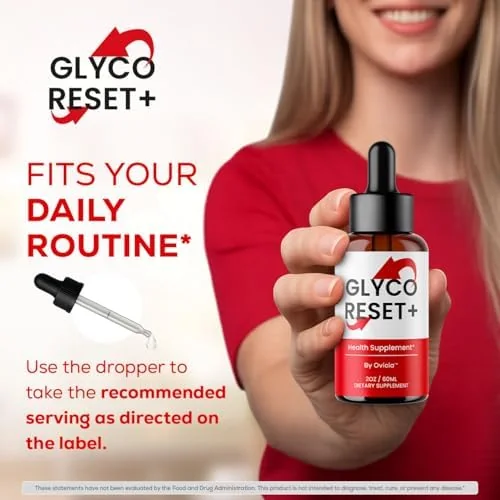
Why "the ingredients have evidence" is not the same as "the product works"
This is the single most important distinction, so it goes first. A finished supplement like Glyco Reset has not, as a product, been through a clinical trial — and neither has any other liquid dropper blend on this shelf. What has been studied are its individual ingredients — often in isolation, at specific doses and extracts, in specific populations. That research can be genuinely useful, but it does not automatically transfer to a multi-ingredient liquid at whatever amounts appear on a given label. Whenever you read "clinically studied ingredients", translate it as exactly that: the ingredients, not this product.
Berberine: the one with real evidence
Berberine is the ingredient worth taking seriously. It is a plant alkaloid, and numerous randomised trials and meta-analyses have examined it for glucose metabolism, with several reporting meaningful effects on fasting glucose and related markers — a systematic review and meta-analysis in Evidence-Based Complementary and Alternative Medicine pooled the randomised trials available at the time, and a 2024 umbrella meta-analysis in Clinical Therapeutics reviewed the meta-analyses themselves. That is a stronger evidence base than most botanicals on this shelf can claim.
Two caveats matter. First, dose: studies typically use amounts split across the day, and a small splash in a blend may not match them — check the label. Second, and more important, berberine can genuinely lower blood glucose and can interact with diabetes medication. That is a feature, not a bug, but it means anyone on insulin, metformin or a sulfonylurea should not add it without medical supervision and monitoring, because stacking effects can push blood sugar too low.
Dose is where that research is won or lost, so the specifics of berberine dosage and timing matter more than the ingredient name on a label.
Chromium: modest but real
Chromium is a trace mineral involved in the body's normal insulin response. Supplemental chromium has modest evidence for supporting glucose metabolism, with the clearest signal in people whose intake is low to begin with; a systematic review and meta-analysis of chromium supplementation found small average effects alongside considerable variation between trials. It will not transform anyone's numbers on its own, but as a supporting cofactor it is one of the better-justified non-botanical inclusions.
The detail behind that sits in the literature on chromium picolinate and insulin sensitivity.
Cinnamon, gymnema and banaba: plausible, not proven
These are where the marketing tends to outrun the data.
The banaba case in particular rests on corosolic acid from banaba leaf, studied in trials that are small and short.
- Cinnamon has a plausible mechanism and some positive trials, but the overall picture is inconsistent and depends heavily on the type and dose of extract. An updated systematic review in Annals of Family Medicine and a later dose-response meta-analysis in Phytotherapy Research both report effects on glucose markers while cautioning about heterogeneity between studies — the reviewers keep landing on “promising but not conclusive”.
- Gymnema sylvestre is traditionally the “sugar destroyer” and can blunt sweet taste; small studies such as a trial in adults with impaired glucose tolerance suggest a role in carbohydrate handling, but they are limited in size and quality.
- Banaba leaf (corosolic acid) and bitter melon have early, small human studies — a review of banaba and corosolic acid in Phytotherapy Research is candid about how small that literature is. Treat them as supporting ingredients with modest, uncertain effects.
Berberine vs cinnamon: which one has the stronger evidence?
Berberine has the stronger evidence of the two, and it is not close. Berberine has been through dozens of randomised trials and several meta-analyses of those trials, with pooled results pointing in a consistent direction on fasting glucose and HbA1c. Cinnamon has been through plenty of trials too, but the results scatter: some report a useful drop in fasting glucose, others report nothing, and the reviews that pool them keep flagging how much the extract type, the dose and the study population differ from one trial to the next.
The two are also different kinds of ingredient, which is the part comparison articles usually miss. Berberine is a single purified alkaloid, so a trial of berberine is a trial of a known compound at a known dose. Cinnamon is a spice, and “cinnamon” in one study may be cassia bark powder while in another it is a water-soluble extract standardised to particular polyphenols. That is enough on its own to explain a lot of the inconsistency, and it is why a cinnamon result in one trial does not necessarily tell you anything about the cinnamon in your bottle.
None of that makes cinnamon useless. It makes it a supporting ingredient with a plausible mechanism and a mixed record, sitting behind berberine rather than beside it. If you want the detail on either one on its own, we have longer pieces on how much cinnamon per day the trials actually used and on berberine dosage and timing.
Is berberine plus cinnamon plus chromium better than any one alone?
Nobody has shown that it is. That is the honest answer, and it deserves to be stated plainly because combination formulas are usually sold on the implication that the answer is yes. The individual ingredients have been trialled individually. The specific three-way or eight-way blend in any given bottle has not been trialled at all, so any claim of synergy between them is a hypothesis rather than a finding.
There is a reasonable argument for combining, and it is worth stating fairly: these ingredients are studied for overlapping but not identical mechanisms — berberine on cellular energy signalling, chromium as a cofactor in the normal insulin response, gymnema on sweet taste and carbohydrate handling, banaba on cellular glucose uptake. Stacking mechanisms is a sensible design principle. It is just not evidence, and it comes with a real trade-off: the more ingredients you fit into one dose, the less of each one you can fit, and the further each drifts from the amount the trials used. A blend can end up with eight ingredients and study-level amounts of none of them.
How the five ingredients compare
Here is the same judgement in a table. “Evidence strength” means the quantity and consistency of human trial data, not how well any ingredient will work for you.
| Ingredient | What it is studied for | Evidence strength | The main caveat |
|---|---|---|---|
| Berberine | Fasting glucose, post-meal glucose, HbA1c | Strongest of the group — many randomised trials plus meta-analyses | Poor absorption, so trials split the dose; genuine interaction risk with glucose-lowering medication |
| Chromium | Supporting the body’s normal insulin response | Modest and mixed; clearest where intake was low | Small average effects; not a lever on its own |
| Cinnamon | Fasting glucose, insulin sensitivity markers | Plenty of trials, inconsistent results | “Cinnamon” means different extracts at different doses across studies |
| Gymnema sylvestre | Sweet taste perception, carbohydrate handling | Small trials, limited quality | Traditional-use reputation runs well ahead of the trial data |
| Banaba leaf (corosolic acid) | Cellular glucose uptake | Early and small human studies | Most of the mechanistic work is preclinical |
What the evidence shows — and what it does not
What it shows. Two of these ingredients, berberine and chromium, have human trial data that a reasonable person can point at. Berberine’s is the more substantial: multiple randomised trials, pooled by more than one meta-analysis, generally moving glucose markers in the same direction across roughly three months. Chromium’s is real but small. Cinnamon, gymnema and banaba each have positive individual studies. This is a genuinely better position than most supplement categories can claim.
What it does not show. It does not show that any finished blend works, because no finished blend has been trialled. It does not show that the amounts in your bottle match the amounts in the studies — that is a label question, not a science question, and proprietary blends make it unanswerable. It does not show any effect on long-term outcomes such as complications or cardiovascular events. And it does not show any of these ingredients treating or preventing a disease; the research is about supporting normal glucose metabolism in the ordinary sense, which is a much narrower claim than the category’s advertising tends to imply.
How to read an ingredient label on this shelf
- Look for named amounts, not just named ingredients. An ingredient with no milligram figure beside it tells you nothing about whether it is present at a studied amount.
- Be wary of a long “proprietary blend”. One total figure covering eight ingredients hides the split between them, which is usually the point.
- Check the extract, not only the plant. Cinnamon in particular behaves differently as a bark powder than as a standardised water-soluble extract.
- Count the servings. Berberine trials generally split the daily amount across meals rather than giving it all at once, so a single daily dose is a different regimen from the one that was studied.
- Match the timeline to the biology. These are eight-to-twelve-week ingredients; our guide to how long blood sugar supplements take to work sets out what is fair to expect in each window.
Three mistakes people make with combination formulas
- Reading “clinically studied ingredients” as “clinically studied product”. The phrase is accurate and it is not the same claim. It never refers to the bottle in your hand.
- Assuming more ingredients means more effect. Beyond a point it means smaller amounts of each, which is the opposite of what the trials used.
- Adding a berberine-containing blend on top of glucose-lowering medication without telling anyone. This is the one that can actually hurt you, because berberine works, and two things that lower glucose can lower it further than intended.
What a realistic expectation looks like
Put together, a formula like this is best understood as lifestyle support, not medicine. If it does anything for you, it will be gradual, it will build over 8–12 weeks of consistent use, and it will work best alongside the changes that move blood sugar the most: diet, movement, sleep and weight — the same fundamentals behind walking after meals and the order you eat your food in. A supplement that ignores those and promises a dramatic drop in a week is describing marketing, not physiology.
The honest summary: berberine and chromium give a formula like this a legitimate rationale; cinnamon, gymnema and banaba add plausible support with thinner evidence; and none of it treats diabetes or replaces medication.
The safety part people skip
Because berberine actually works on glucose, the interaction risk is real. If you take any glucose-lowering medication, talk to your doctor before starting, and monitor. Licorice root, common in these blends, can raise blood pressure and lower potassium with heavy use. Pregnancy, nursing and being under 18 are reasons to wait. This is not boilerplate — it is the direct consequence of using ingredients that have genuine biological activity.
References
- NIH NCCIH — Diabetes and Dietary Supplements
- Berberine in the treatment of type 2 diabetes mellitus: a systematic review and meta-analysis. Evid Based Complement Alternat Med, 2012 (PMID 23118793)
- The effect of berberine supplementation on glycemic control and inflammatory biomarkers: an umbrella meta-analysis. Clin Ther, 2024 (PMID 38016844)
- The effect of cinnamon supplementation on glycemic control in type 2 diabetes: an updated dose-response meta-analysis. Phytother Res, 2024 (PMID 37818728)
- Systematic review and meta-analysis of the efficacy and safety of chromium supplementation in diabetes. J Clin Pharm Ther, 2014 (PMID 24635480)
- Effect of Gymnema sylvestre administration on glycemic control in impaired glucose tolerance. J Med Food, 2021 (PMID 32460589)
- A review of the efficacy and safety of banaba (Lagerstroemia speciosa L.) and corosolic acid. Phytother Res, 2012 (PMID 22095937)
- NIH Office of Dietary Supplements — Chromium
- Cochrane Library — cinnamon for diabetes
- American Diabetes Association — Standards of Care
Related reading
Frequently asked questions
Does berberine actually lower blood sugar?
Berberine has the strongest evidence of the group. Numerous randomised trials and meta-analyses report meaningful effects on fasting glucose and related markers, a better base than most botanicals on this shelf. The catches are dose, which must match what the studies used, and interactions: berberine can genuinely lower glucose and should not be combined with diabetes medication without medical supervision.
Is cinnamon proven to help blood sugar?
Not conclusively. Cinnamon has a plausible mechanism and some positive trials, but the overall picture is inconsistent and depends heavily on the type and dose of extract used. Systematic reviews have repeatedly landed on "promising but not conclusive". It is reasonable as a supporting ingredient, not something to rely on for a measurable change on its own.
Can these ingredients replace diabetes medication?
No. None of these ingredients treats diabetes or replaces prescribed medication. They are studied for supporting normal glucose metabolism, not for managing a diagnosed condition. If you take insulin, metformin or a sulfonylurea, adding berberine in particular can push blood sugar too low, so any change should be made with your doctor and with monitoring.
How long do blood-sugar supplements take to work?
Gradually. If a formula like this does anything for you, expect it to build over roughly 8 to 12 weeks of consistent use, and to work best alongside diet, movement, sleep and weight management. A product promising a dramatic drop within a week is describing marketing rather than physiology, so judge results slowly and realistically.
See the full Glyco Reset review
Every ingredient, the current sale pricing, and the 60-day guarantee — laid out plainly.
Read the Glyco Reset Review